

Mozart’s Violin
by Jacob Stainer, made in Absam, Austria (1670–1675)
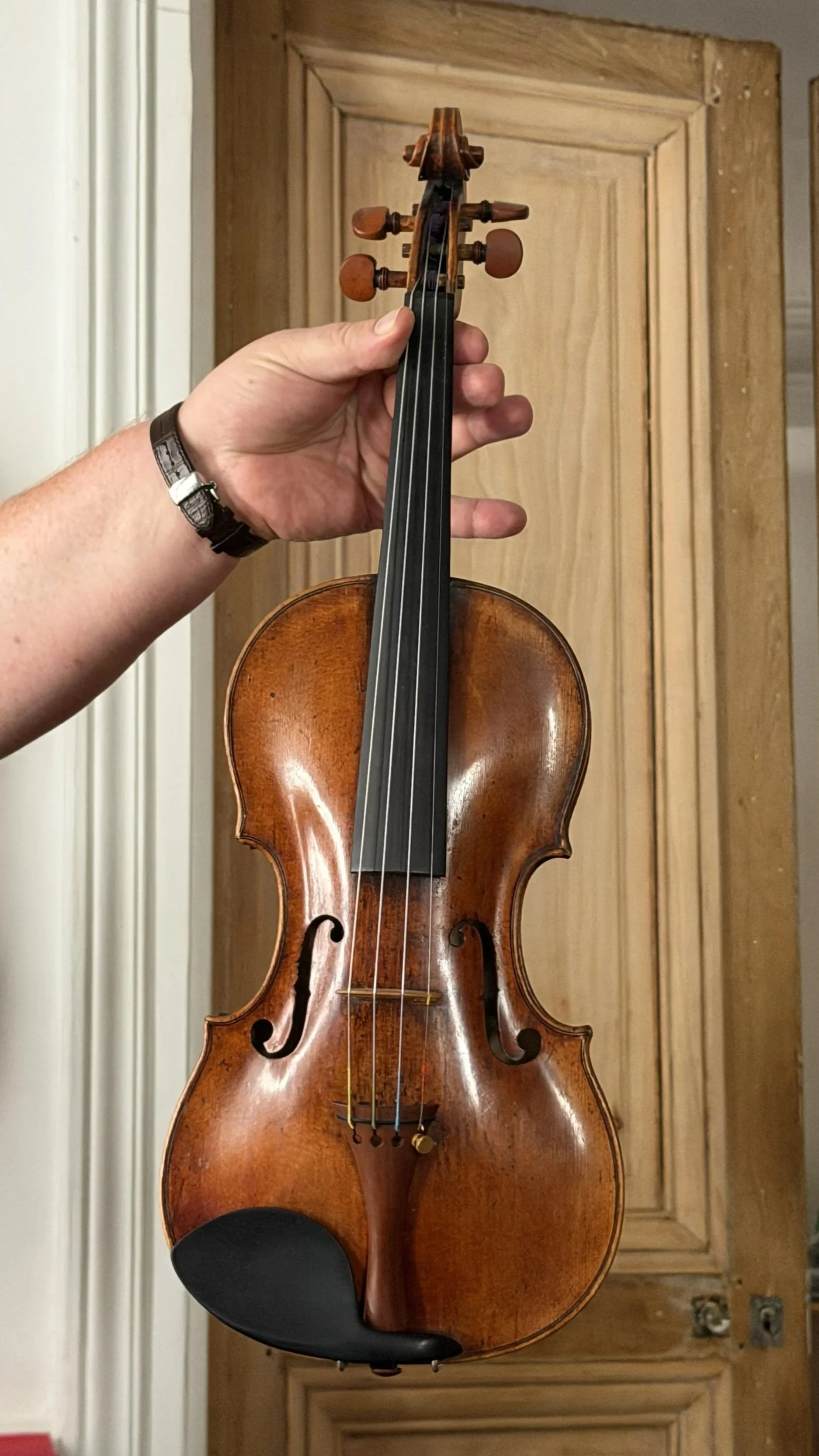
The Stainer Violin
Overview
The instrument presented here was made around 1670 in Absam by Jacob Stainer, the seventeenth-century Austrian luthier. His instruments were the best known and most sought after throughout the eighteenth century, and before 1800 cost twice as much as a good Italian instrument (an Amati). Nearly all the great soloists of the period owned a Stainer (Bach, Tartini, Locatelli, Geminiani). As an aside, in Mozart's time a J. Stainer violin cost around 10,000 florins
It was in this context that Prince Lobkowicz, as a reward for the success of the performances of The Marriage of Figaro (whose first performances were given at the Burgtheater in Vienna, where P. Wranitzky had just been appointed director), gave Mozart a violin by this luthier in Prague in 1787. The violin is said to have been given to him because of a historical parallel Prince Lobkowicz drew with Mozart's own life: the instrument had been made while Jacob Stainer was in prison for his Lutheran activities, symbolizing, in the Prince's eyes, a desperate search for freedom. The story as told until now has been that Mozart actually owned only a later, eighteenth-century German instrument (a Klotz) bearing a spurious Jacob Stainer label — copies and forgeries of this luthier's work already being widespread at the time.
The probate inventory taken after Mozart's death does not list the Stainer, only an Anton Walter piano, a viola, and a Klotz violin with a false Stainer label — instruments now on display at the Mozarteum in Salzburg. The story might have remained fixed in this form were it not for the discovery of this instrument, which had belonged to a virtuoso violinist and composer now largely forgotten, Anton Wranitzky, who owned this violin.
Anton Wranitzky, a friend and pupil of Mozart, was the brother of Paul Wranitzky, secretary of the Tonkünstler-Sozietät, the well-known composers' society whose president was Antonio Salieri. After Mozart's death, Prince Lobkowicz asked Anton Wranitzky to buy back from Constanze Mozart the Stainer violin he had previously given him. Constanze would later also call on Paul and Anton Wranitzky to negotiate the sale of Mozart's manuscripts to, among others, the publisher André of Offenbach.
Wanting to acquire an instrument that had belonged to W. A. Mozart, André — again through the Wranitzky brothers — obtained a dalla Costa violin, which likewise did not appear in the probate inventory (the dalla Costa is now owned by the Stiftung Mozarteum and is on display). Wranitzky, on becoming Kapellmeister to the Princes Lobkowicz on 1 January 1797, asked to buy the violin of the man whose pupil and friend he had been.
The transaction was concluded on 6 March 1797 and appears in the Lobkowicz family's registers as the sale of the "Mozart Stainer instrument, sold." The violin subsequently belonged to a number of celebrated violinists whose musical lineage traces back to the Austrian school, of which Wranitzky was one of the founders. The people involved, the probabilities, and the research carried out all support the conviction that this instrument was indeed "the property of W. A. Mozart."
Characteristics
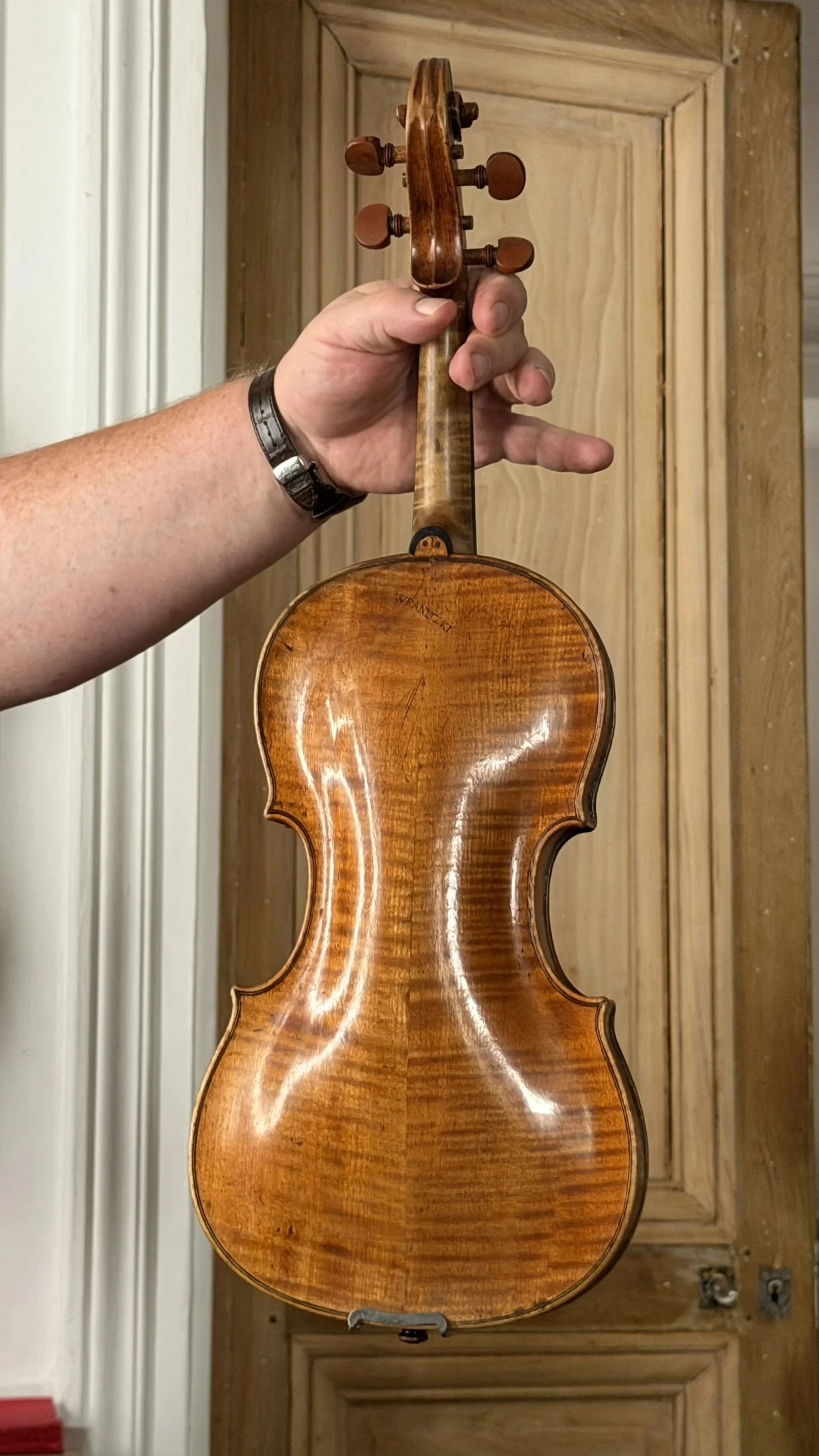
The instrument is a violin by Jacob Stainer, made in Absam around 1670–1675, bearing a Jacob Stainer label reading "made in Absam" in [1]65_ (final digit illegible in the original).
The instrument measures 35.4 cm.
It received a Viennese-style setup around 1785.
It bears the mark "WRANITZKI" on the back, and inside, a restoration signature by Gand of Paris, dated 18__ (year illegible).
A dendrochronological dating (presented at Mundomusica Cremona in October 2014) shows a last measured growth ring dated 1666, from wood originating in the Obergurgl region (about 20 km from Absam).
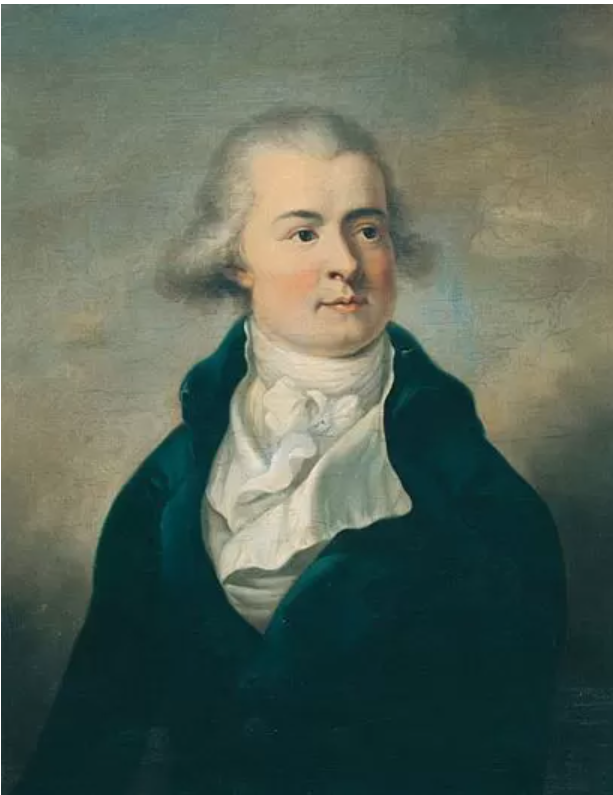
Franz Joseph Maximilian, 7th Prince Lobkowicz (1772–1816)
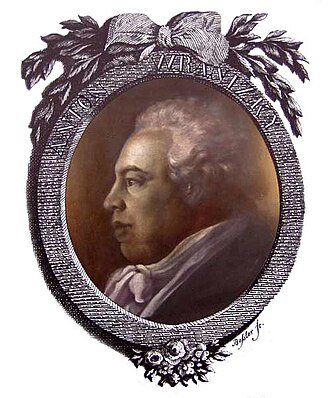
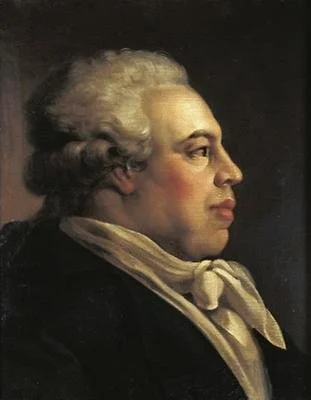
Anton Wranitzky
Anton Wranitzky (also Wranitski, Vranicky; 13 June 1761 – 6 August 1820) was one of the founders of the Viennese school of violin playing; his pupils included Ignaz Schuppanzigh.
He had three children:
a son, Friedrich, a cellist, who studied under Anton Kraft (whose widow later remarried the luthier Stauffer);
a daughter, Anna Kraus Wranitzky, a singer who frequently performed with Joseph Mayseder (a pupil of Paul Wranitzky and second violin of the Schuppanzigh Quartet). Joseph Joachim paid tribute to her playing on several occasions, particularly her interpretation of the Mozart and Beethoven quartets, in which she was an unrivaled performer;
and a second daughter, Karoline Seidler-Wranitzky, a singer, who married the violinist Carl August Seidler (the first public performer of Beethoven's Triple Concerto, alongside Anton Kraft, with Beethoven himself at the piano).
Anton Wranitzky was a close friend of both Mozart and Beethoven.
His brother Paul (1756–1808) belonged to the same Masonic lodge as W. A. Mozart, "Zur gekrönten Hoffnung," having been initiated before Mozart. In 1790 he became director of the orchestras of the Vienna court theaters. He was especially valued by his peers as a conductor: Haydn asked him to conduct the premiere of his oratorio The Creation, and Beethoven asked him to conduct the premiere of his Symphony No. 1 in 1800.
Among other roles, he served as Secretary of the Society of Viennese Musicians, of which Salieri was President. (Salieri belonged to the same lodge as Mozart and Wranitzky.)
Occasions on Which the Violin Was Played
(literally "Events the violin took part in")
Premiere of Sonata K. 526 in A major, W. A. Mozart, August 1787: W. A. Mozart
Premiere of Haydn's The Creation, 1798: A. Wranitzky
Two quartets, Op. 77, by Haydn, 1799: A. Wranitzky
Premiere of Beethoven's Symphony No. 1, 1800: A. Wranitzky
Premiere of Beethoven's Triple Concerto, 1804: A. Wranitzky
Premiere of Beethoven's Symphony No. 3, 1805: A. Wranitzky
Premiere of Beethoven's Symphony No. 5, 1808: A. Wranitzky
Premiere of Beethoven's Symphony No. 6, 1808: A. Wranitzky
Premiere of The Ruins of Athens and King Stephen, 1812: A. Wranitzky
Premiere of Beethoven's Symphony No. 7, 1813: A. Wranitzky
Various premieres of works by Spohr, Hummel, Reicha, and Paul Wranitzky dedicated to Prince Lobkowicz
2013: Congress of Polish luthiers, Potsdam
2014–2015: On loan to the Stiftung Mozarteum, Salzburg
October 2014: Case presented at the dendrochronology convention "Mundomusica," Cremona, Italy
2015: On loan to Julien Chauvin: "Concerts de la Loge Olympique"; Cambini Quartet
2016: Used in a recording of Haydn's Paris Symphonies

Ownership History of the Violin
Prince Lobkowitz, until 1787
W. A. Mozart, 1787–1791: given to him in Prague after the performances of The Marriage of Figaro, in gratitude for their success. Pupil of Albrechtsberger, Salieri, [and] "Steicher FM" (abbreviation unclear in the original). The choice of violin is said to have been determined by the fact that it was made during a period when J. Stainer was imprisoned for his membership in the Reformed Church. It bears an earlier label dated 1656 (the J. Stainer known as "the King" is a similar case).
Prince Lobkowitz, 1792 – 6 March 1797: bought back from Constanze Mozart in 1792. Pupil of Anton Wranitzky and patron of Beethoven.
Anton Wranitzky, 1797–1820: bought from Prince Lobkowitz on 6 March 1797. Pupil of Albrechtsberger, Mozart, Haydn, [and] Paul Wranitzky.
Ignaz Schuppanzigh, 1820–...: pupil of Anton Wranitzky (not certain).
Owners unknown
Joseph Joachim: 1905 (pupil of Hellmesberger, [who was] a pupil of Böhm)
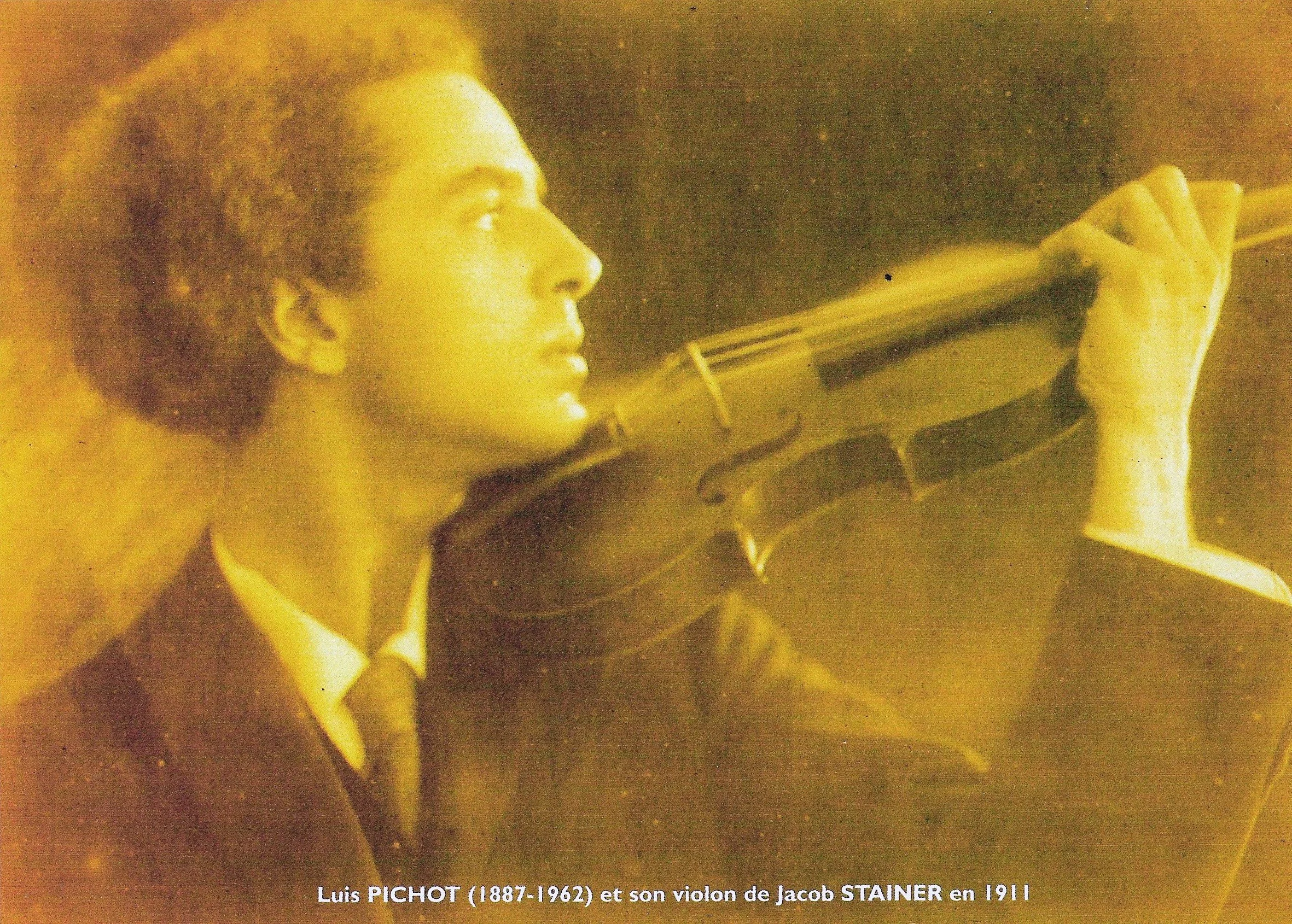
Luis Pichot, 1905–195_(?): pupil of Thibaud (pupil of Marsick, pupil of Ysaÿe and of Enescu, pupil of Marsick and J. Hellmesberger, pupil of G. Hellmesberger) and of Crickboom (pupil of Ysaÿe, pupil of Vieuxtemps, pupil of Sechter, pupil of Salieri and of Reicha [pupil of Salieri and Albrechtsberger])?
Madame H. Carcassonne, widow of Pichot, 195_(?)–1984
Antique dealers, northern France, 1984–1985
A luthier in Paris, 1985–2012
Xavier Guerland, 2012–present
— The National Chamber Orchestra is grateful to the patronage and generosity of Xavier Guerland for his loan of the Stainer violin for our programming this season.